How to Spot a Fake Job Offer Scam

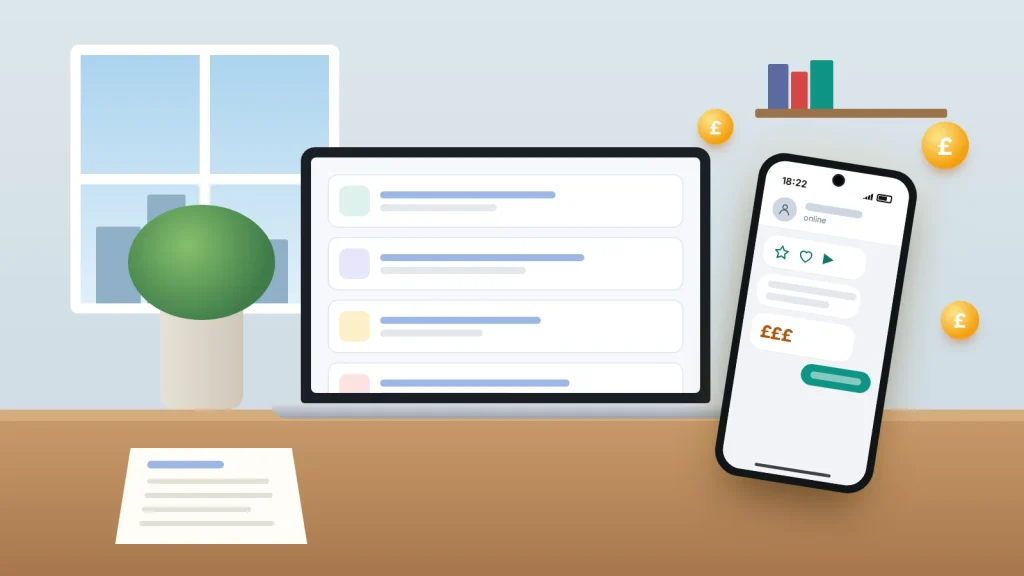
A WhatsApp message arrives from a number you do not recognise. A friendly “recruiter” has seen your profile and has flexible remote work: rate a few products or like some videos, earn £50 to £300 a day, no experience needed. Or a polished recruiter on a job site offers you an interview for a role that sounds perfect, conducted entirely by text chat, with an offer by the end of the afternoon.
Fake job offers have grown fast. The US Federal Trade Commission says reported losses to job and employment agency scams rose from $90 million in 2020 to $501 million in 2024, and that reports of “task scams” jumped from about 5,000 in all of 2023 to about 20,000 in the first half of 2024 alone. The FBI’s Internet Crime Complaint Center logged 24,688 employment fraud complaints in 2025, with losses of almost $363 million.
Here is how the main types work, a side-by-side comparison of a real job and a fake one, the checks to make before you hand over anything, and what to do if you have already paid, shared documents or moved money for someone.
The short version
- You should never have to pay to get a job, whether it is called a deposit, training fee, equipment cost, visa fee or “upgrade”.
- Unexpected job messages on WhatsApp, Telegram or by text, and interviews held only by chat, are strong warning signs.
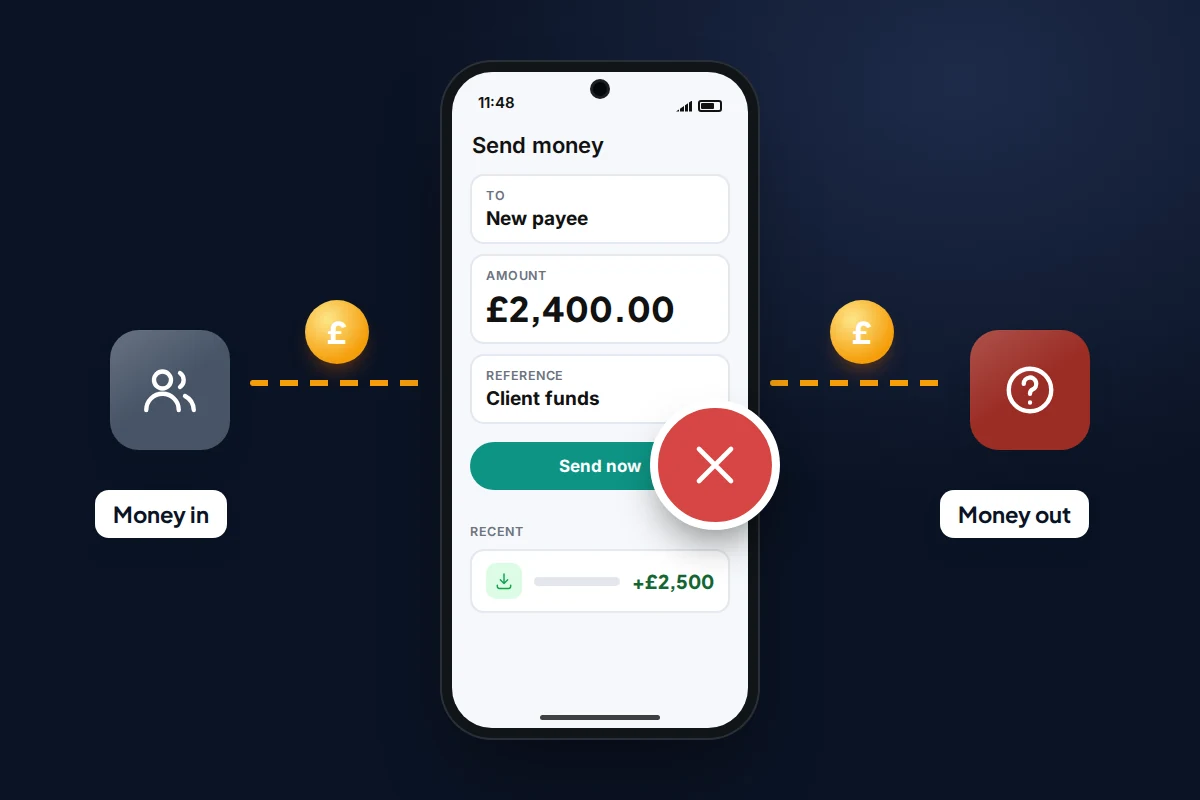
- A job that involves receiving money into your account and passing it on is money laundering. It can bring a criminal record, a closed bank account and years of trouble getting credit.
- Do not send a passport, bank details or your National Insurance number before a genuine written offer from a company you have verified yourself.
- If you have been caught, stop paying, call your bank and report it. Nobody can recover the money for a fee.
Task scams: paid to click, then asked to pay
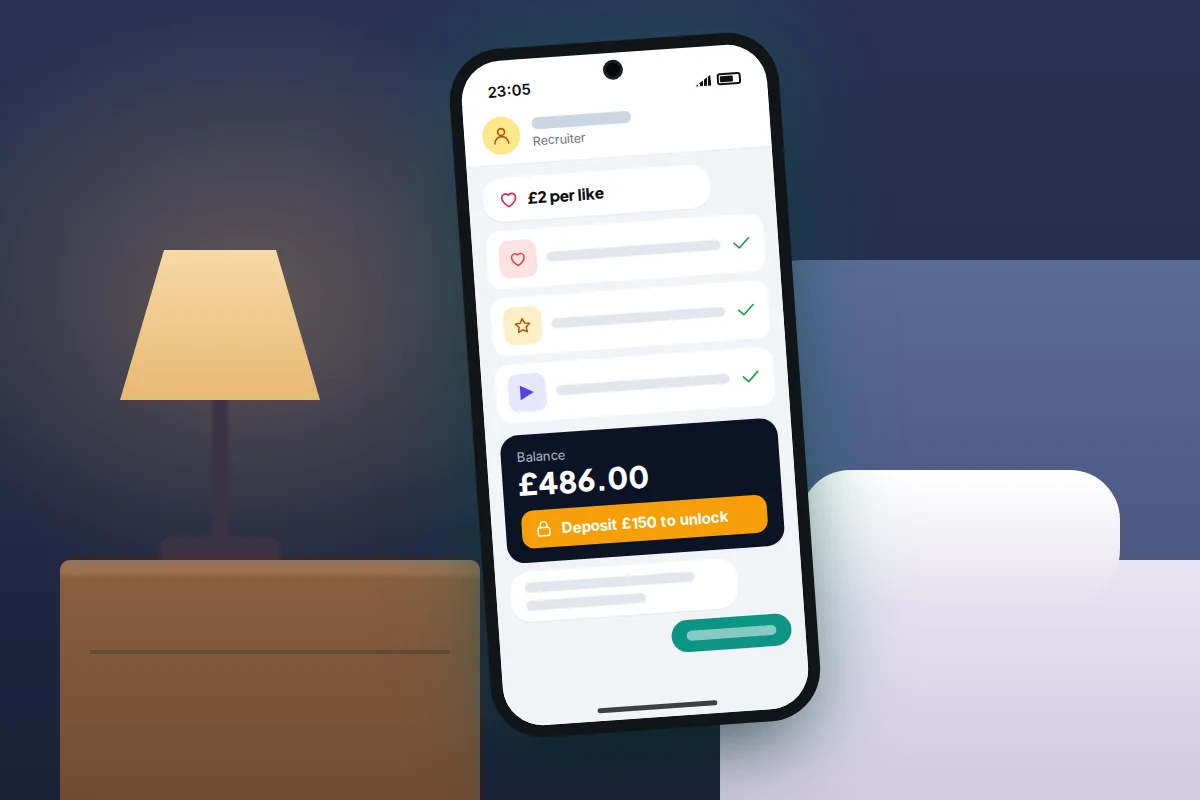
The FTC describes task scams as “gamified” jobs. You are given simple, repetitive online tasks, such as liking videos or rating product images, in an app or website that shows your earnings climbing. At first you may be allowed to withdraw a small amount, which makes the whole thing feel real.
Then the rules change. You are told to deposit your own money, often in cryptocurrency, to unlock the next set of tasks or release what you have earned. Each deposit leads to another, sometimes presented as a tax, a fee or an account upgrade. The FTC’s advice is short: never pay to get paid. Anyone asking you to pay to access money you have supposedly earned is running a scam.
These schemes rely on the same slow build of trust as romance scams: small wins, a friendly “mentor” in a group chat, other “workers” posting their payouts, and pressure that grows only once you are invested.
Fake recruiters and chat-only interviews
Not every fake offer is a task scam. Some use the look of a normal hiring process to collect fees or personal details. Report Fraud, the police reporting service for England, Wales and Northern Ireland, and Take Five, the UK banking industry’s fraud campaign, list similar warning signs:
- They came to you. An unexpected message, often by text, WhatsApp or Telegram, sometimes asking you just to reply “YES”. The FTC says honest employers do not recruit this way.
- Vague details. The recruiter will not name the company or describe the role clearly, or knows about a CV you never sent them.
- Personal email addresses instead of an address on the company’s own domain.
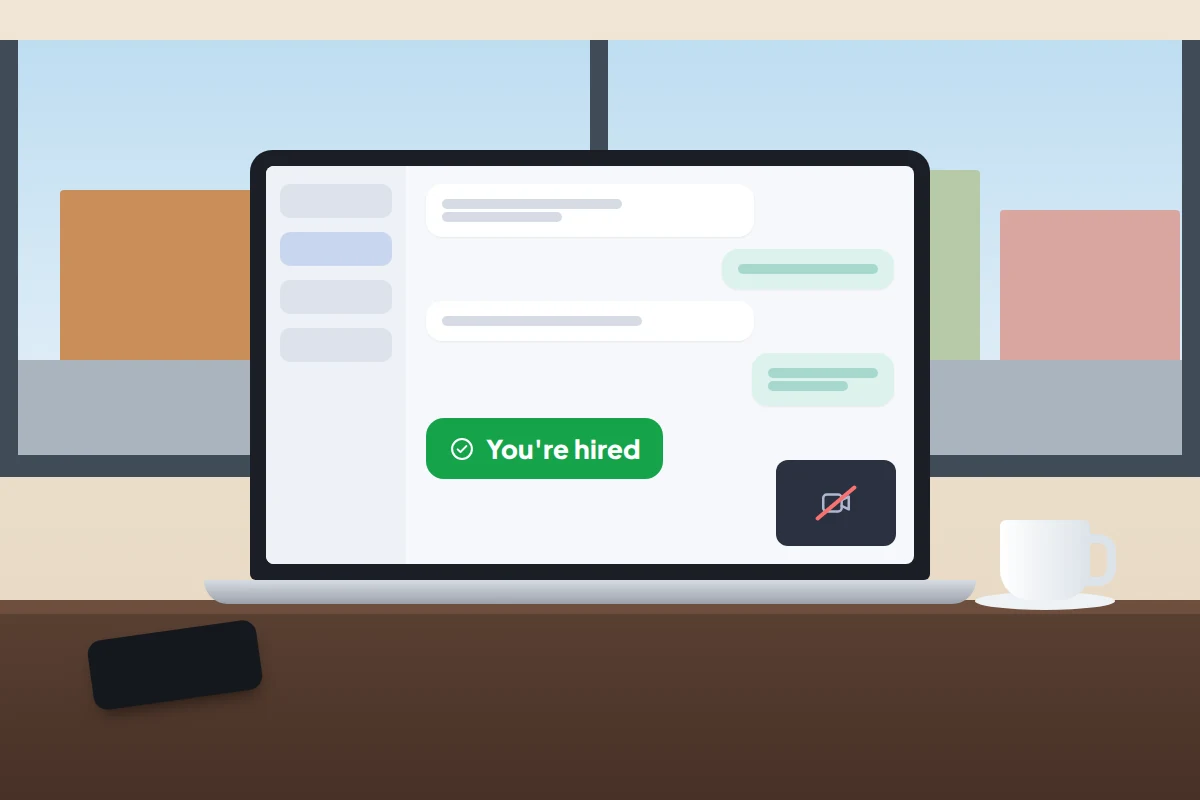
- The interview is a text chat. Questions arrive in a messaging app, nobody appears on camera, and an offer follows within hours.
- High pay for little effort, with pressure to accept or pay “today” to secure your place.
Scammers often copy the name and logo of a real company, so a familiar name proves little. What matters is whether you can reach the same people through that company’s own website.
Fees for training, equipment, checks and visas
Report Fraud describes fraudsters who ask for money for equipment, training programmes or security checks, with the promise that the money will be returned. It never is. Take Five puts the rule plainly: you should never have to pay to apply for a job or to speak to a recruiter.
Jobs abroad attract a variation. An “agency” offers to arrange a visa, flights and accommodation, then new fees keep appearing. Report Fraud advises researching visa requirements yourself through the relevant embassy and booking your own travel. For work in the UK, you can check that an employer is licensed to sponsor workers on GOV.UK’s register of licensed sponsors, and a sponsor must pay the certificate of sponsorship fee and Immigration Skills Charge itself. It can lose its licence for asking the worker to cover them.

The cheque or payment that bounces later
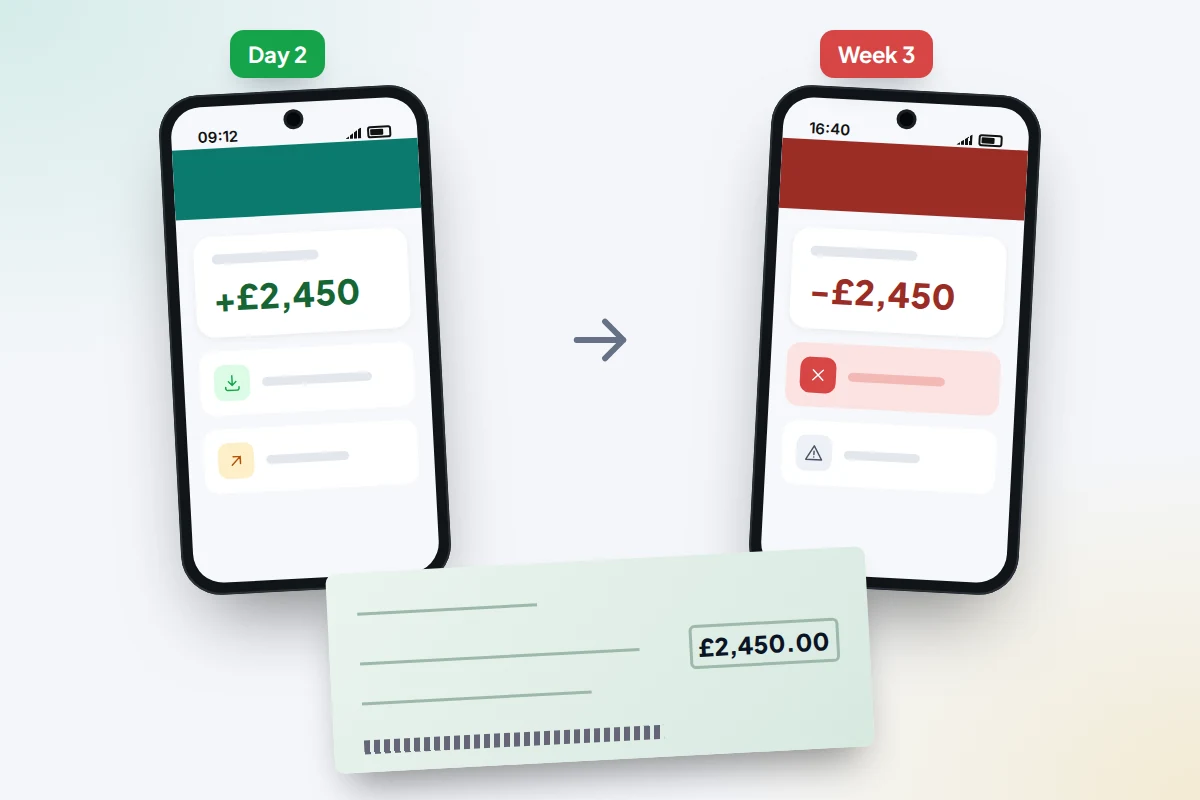
Another pattern starts with the employer paying you. A cheque or transfer arrives to buy equipment or supplies, it is for more than expected, and you are asked to send the difference back or pay a named “supplier”.
The FTC warns that no honest employer will send you a cheque to deposit and then ask you to send part of the money on. Money showing in your account is not the same as money that is safely yours: the FTC notes that fake cheques can take weeks to be discovered, by which time the scammer has what you sent and you owe the bank. If the incoming payment was itself stolen, you may also have moved criminal money, which leads to the next point.
“Receive and forward payments”: money mule jobs
Some adverts are honest about the task but not about what it is. You are hired as a “payments agent”, “finance assistant” or “account manager” to receive money into your bank account and transfer it on, keeping a commission. Sometimes it is dressed up as reshipping parcels or buying cryptocurrency for a client.
This is money muling. Don’t Be Fooled, the campaign run by UK Finance and the fraud prevention service Cifas, is clear that it is money laundering, which is a crime, and that people who start can find it hard to stop, sometimes under threat. Cifas members recorded more than 22,000 cases under a new money mule category in 2025, and names job scams among the lures criminals use.
The consequences are serious and long-lasting:
- Criminal liability. UK government guidance notes that money laundering offences carry sentences of up to 14 years in prison and/or an unlimited fine.
- A closed bank account, and a record on the National Fraud Database that other banks and lenders can see.
- Years of knock-on problems. Don’t Be Fooled warns that a damaged credit history can make it hard to get loans, including student loans.
When onboarding is really identity theft
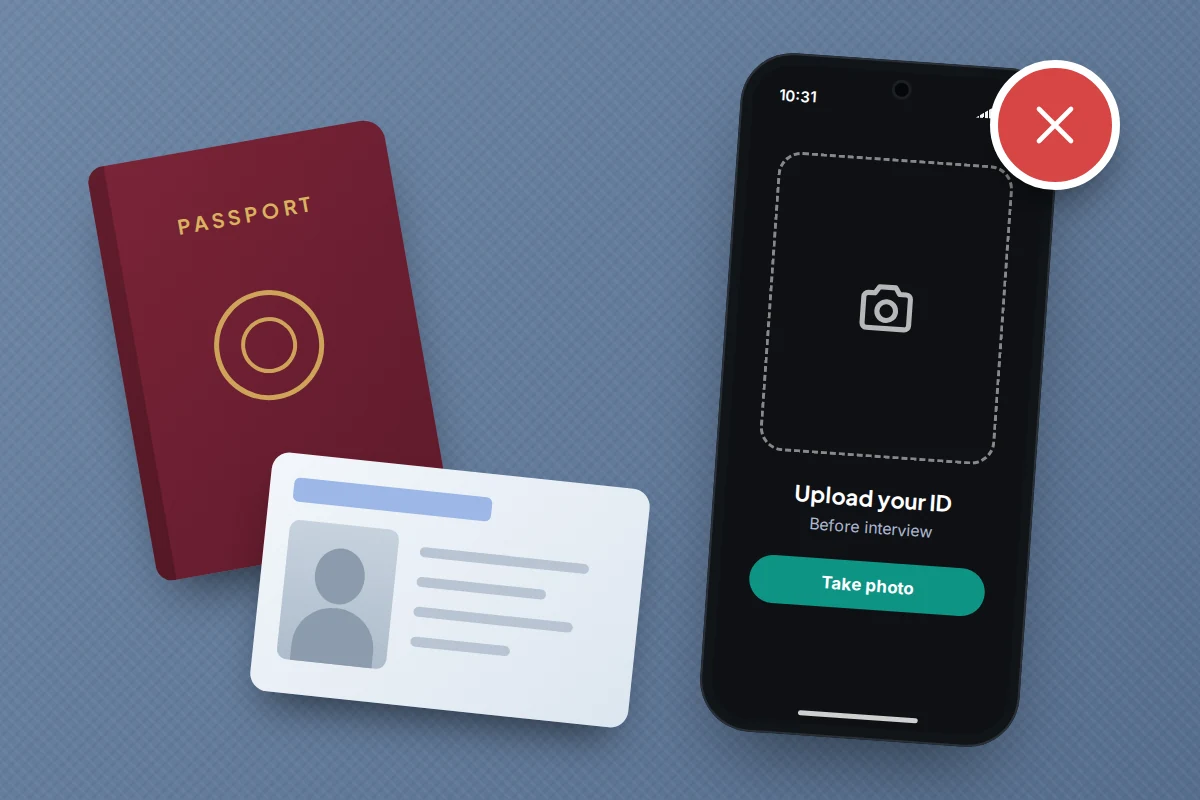
Some fake employers never ask for money. They want your identity instead: a passport scan, a selfie holding your ID, your National Insurance number, date of birth and bank details, all collected through an official-looking “onboarding” form. Report Fraud warns that fraudsters ask for bank details under the guise of setting up salary payments. With that information, criminals can open accounts, take out credit or pass checks in your name.
Genuine UK employers do have to check your right to work before you start, so being asked for ID is not suspicious in itself. The difference is timing and route. A real employer asks once you have an offer from a company you have verified, then checks original documents with you present, uses the official GOV.UK share code service, or uses a certified identity checking provider. Bank details go on a payroll form after you have accepted, not in a chat before anyone has met you.
Real job or scam: side by side
| Stage | A real job | A likely scam |
|---|---|---|
| First contact | You applied, or a recruiter names the company and role | Unexpected message on WhatsApp, Telegram or text |
| Recruiter’s email | On the company’s or a named agency’s own domain | Free personal email, or chat only |
| Interview | Phone, video or in person with named people | Text chat only, nobody on camera |
| Pay | In line with similar roles | High pay for simple tasks and few hours |
| Money | They pay you, through payroll | You pay them, or pass money on for them |
| Equipment | Usually provided by the employer | You buy a “starter kit” or they send a cheque to cover it |
| Documents | ID checked once you have an offer, before you start | Passport and bank details requested up front |
| Timing | Days or weeks, with time to think | Offer within hours, pressure to start today |
Checks that take ten minutes
- Find the company yourself. Search for its official website rather than following a link from the recruiter. Look for the role on its careers page, then contact the company through the phone number or email on its own site and ask whether the recruiter works there.
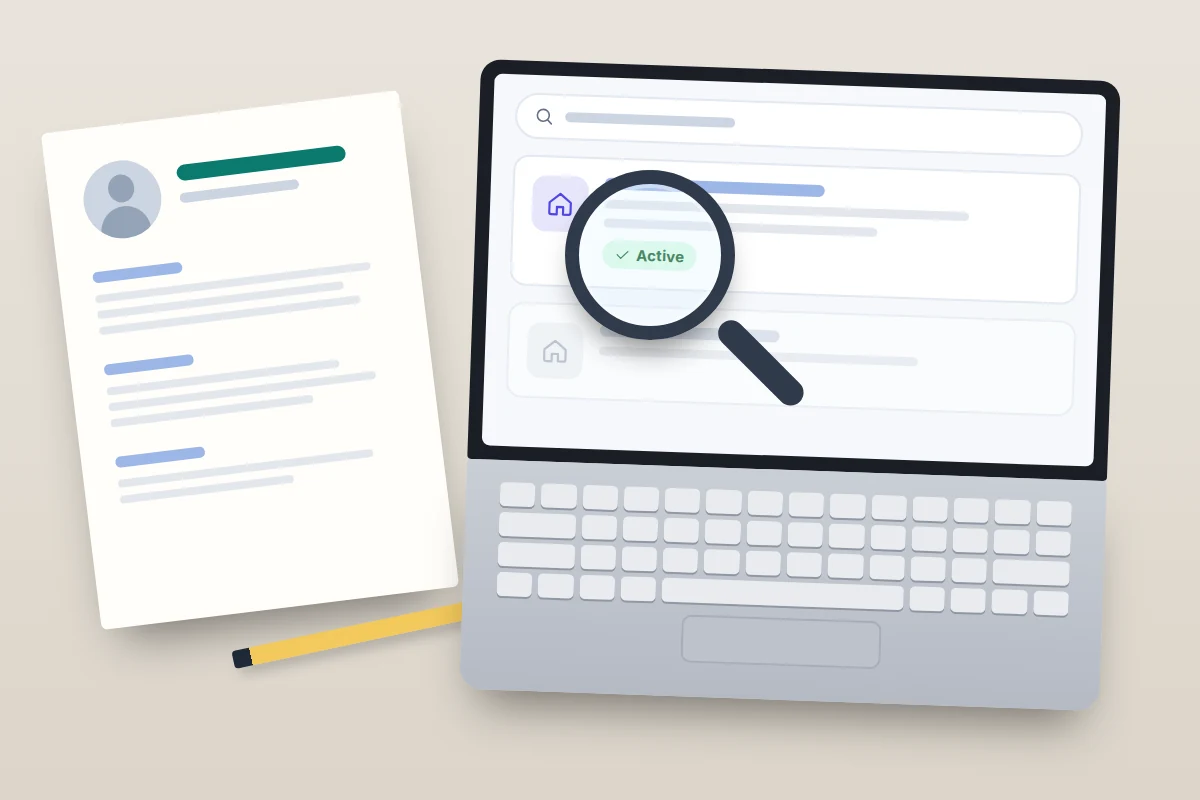
- Check the company register. In the UK, search Companies House for free. Check the company is active, when it was set up and where it is registered. A company formed a few weeks ago, or a registered address that does not match what you have been told, is a warning. A real entry is not proof on its own, because scammers borrow real company names.
- Look at the recruiter’s profile with a sceptical eye. On professional networking sites, warning signs include a very new profile, few connections, little activity, a job history that does not fit, or a photo that looks like a stock image.
- Ask for a video call from a work email. A genuine recruiter can easily arrange a call on camera and email you from the company’s domain. Excuses are an answer in themselves.
- Search the details with the word “scam”. The company name, the app or website you are asked to use, and the recruiter’s name. Others may already have posted about it.
Before you hand over anything: a checklist
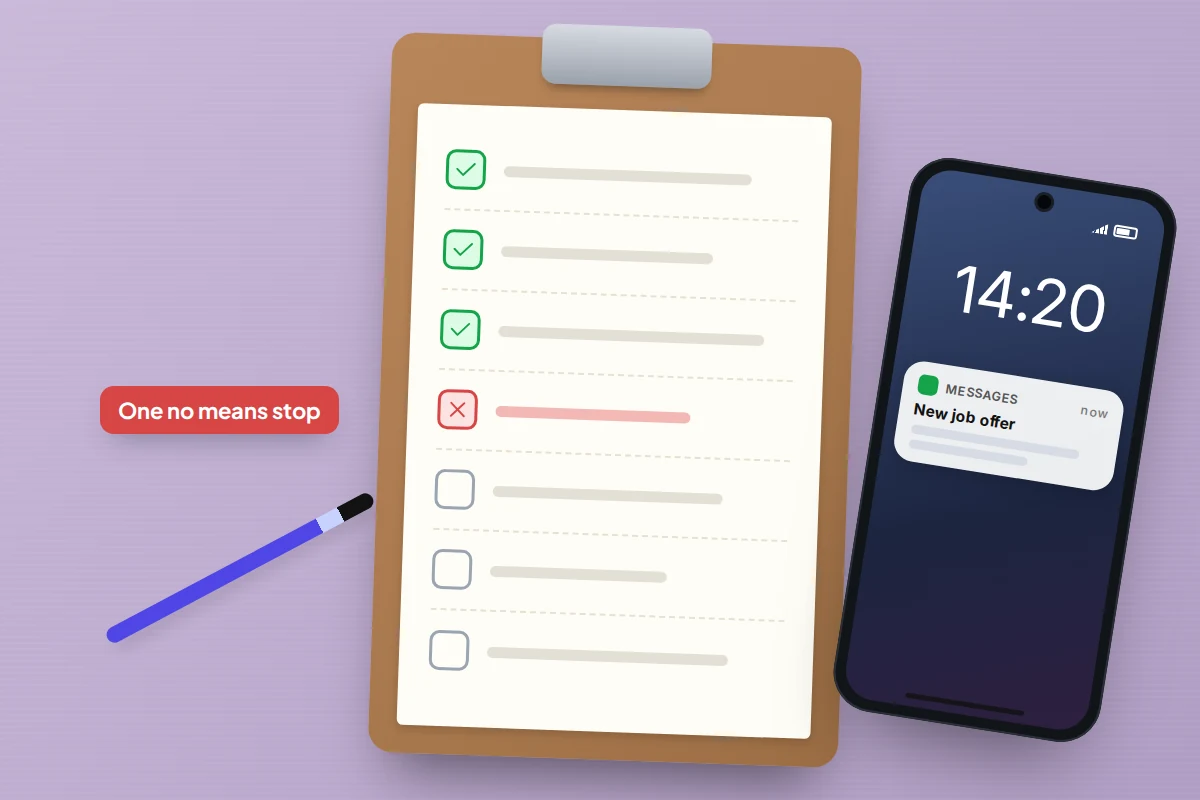
Run through these questions before you pay, send a document or share bank details. If the answer to any of them is “no”, stop and check further.
- Did I apply for this job, or can I find it on the company’s own website?
- Have I spoken to a real person on a phone or video call?
- Has anyone contacted me from an email address on the company’s domain?
- Do I have a written offer with a job title, salary and start date?
- Is the company paying me, rather than me paying it?
- Will every penny that arrives in my account stay there as my wages?
- Would I be comfortable telling a friend or family member exactly what the job involves?
If you have already been caught
- Stop. Do not pay any further fee, tax or deposit, however close the promised payout seems. Stop moving any money that arrives in your account.
- Call your bank on the number on the back of your card, or 159 in the UK. Tell them what you paid, and whether money has come into your account from anyone connected with the job. Ask them to try to stop or recall your payments.
- Keep the evidence: screenshots of chats and adverts, usernames, the app or website address, payment receipts and any wallet addresses.
- Report it. In England, Wales and Northern Ireland, contact Report Fraud at reportfraud.police.uk or 0300 123 2040. In Scotland, call Police Scotland on 101. In the US, report to the FTC at ReportFraud.ftc.gov and the FBI at ic3.gov. Report the profile or advert to the job site or app too.
- If you shared ID documents or your National Insurance number, watch for credit applications in your name. Our guide to what to do when your data has leaked covers checking your credit reports and Cifas Protective Registration.
- Ignore recovery offers. Anyone who contacts you offering to get your money back for a fee is running a second scam.
If you realise you have been passing money on, stop straight away and tell your bank. Coming forward yourself is far better than waiting for the bank or police to find out.
Frequently asked questions
They paid me for the first few tasks. Doesn’t that prove it is real?
No. Small early payouts are part of the design. They cost the scammer little and make you trust the platform before the deposits start.
Is it a crime if I didn’t know the money was stolen?
Whether you knew or suspected will matter to police, but it will not stop a bank closing your account or a fraud record being filed. The safest thing is to stop immediately and tell your bank.
The recruiter wants to move the interview to Telegram or WhatsApp. Is that normal?
Rarely. Some small employers message candidates, but a genuine one will still be happy to arrange a call and email you from a work address. A request to switch apps followed by a chat-only interview is a common scam pattern.
Can a real employer ask me to pay for a background check?
Some roles need a criminal record check, and you may occasionally be asked to cover the fee. But it comes after a real offer and goes through the official service: a basic DBS check for England and Wales costs £21.50 through GOV.UK, and Disclosure Scotland and AccessNI cover Scotland and Northern Ireland. A “check fee” by bank transfer, gift card or cryptocurrency before any offer is a scam.
I sent a scan of my passport. What should I do?
Keep a note of what you sent and to whom, report it, and check your credit reports over the coming months. Be wary of follow-up messages that use your details to seem official.
Sources and further reading
- FTC Consumer Advice: that job offer text is probably a scam (April 2026)
- FTC Data Spotlight: paying to get paid, gamified job scams drive record losses
- FTC Consumer Advice: job scams
- FBI Internet Crime Complaint Center: 2025 Internet Crime Report (PDF)
- Report Fraud: recruitment scams
- Don’t Be Fooled (UK Finance and Cifas): money mules
- GOV.UK: money laundering-linked financial exploitation guidance
- Cifas: Fraudscape 2026 findings
Looking for a tool to go with this? TheTruthSpy is a free parental control app for Android that stays visible on the child's phone. If it fits your family, see what the app does.
Related guides
How to Spot a Fake Tech Support Scam
How fake tech support calls, pop-ups, search ads and refund tricks work, the exact words to end the call, and…
Is Public Wi-Fi Safe? What to Do and What to Avoid
Public Wi-Fi is safer than it was, but fake hotspots, greedy login pages and auto-joining still catch people out. What's…
How to Lock Down Your Facebook Privacy Settings
A 20-minute Facebook privacy review: posts, profile details, search, tags, Messenger, off-Meta activity and objecting to Meta's UK AI training,…
Parental controls your child can see
Location, screen time limits, a web filter and alerts from notifications — free, and visible on your child's phone. Pair a phone in about ten minutes.
Android · Free to set up · Visible on your child's phone