What to do when an urgent alert arrives
A calm first step for self-harm, bullying and stranger alerts, and when to get outside help.
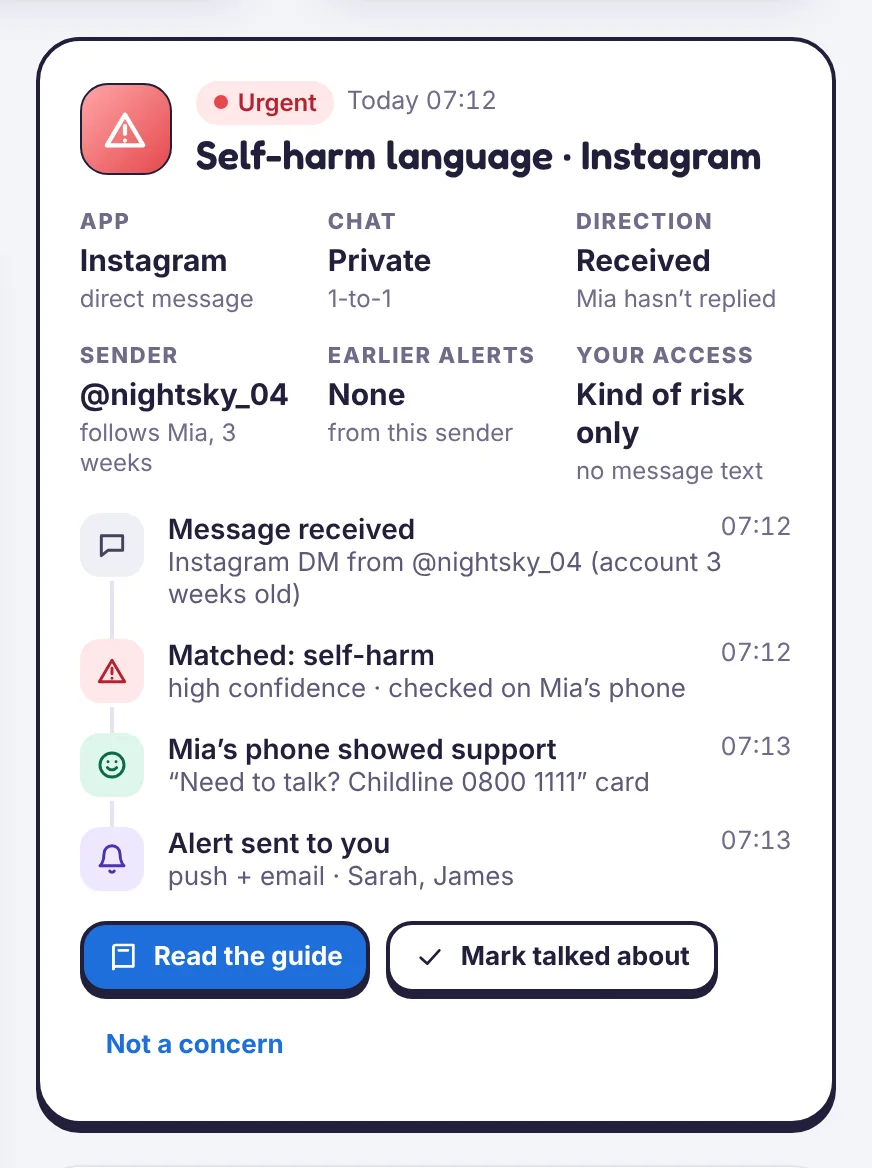
An alert is a reason to talk, not proof of anything. Messages can be jokes, song lyrics or a friend’s problem. Start gently.
If you think your child is in danger now
Call your local emergency number. In the UK that’s 999. Childline (0800 1111) and Samaritans (116 123) are free and open around the clock.
Self-harm alerts
- Find a quiet moment soon, not in front of others.
- Ask open questions: “How have things been lately?” rather than “What did you send?”
- Listen more than you talk. Saying the word “self-harm” doesn’t put the idea in their head.
- If they are struggling, contact your GP or a mental health service for young people.
Bullying alerts
- Ask how things are with friends and in the group chat.
- Help them save screenshots, report and block.
- If it involves classmates, talk to the school.
Stranger alerts
- Ask who the person is and how they met.
- Explain why adults asking to move to private apps is a warning sign.
- Report the account to the app. If an adult has asked a child for images or to meet, report it to the police (CEOP in the UK).
Mark the alert
Choose Talked about, Not a concern or leave it open. This helps you keep track, and it isn’t shown to your child.
Still stuck?
Contact support
Tell us which step you reached and what you see on screen. Screenshots help.